
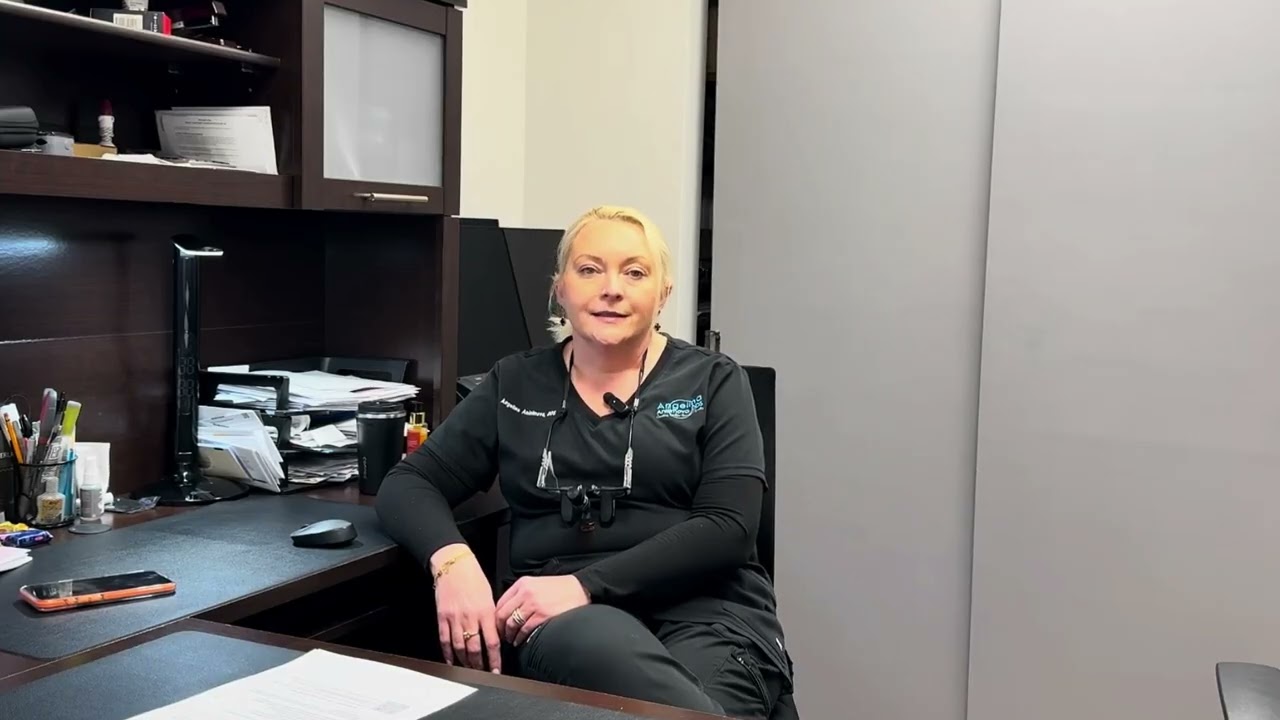
Why do dentists recommend different treatments for the same problem?
Two dentists can recommend two different treatment plans because of different issues with the tooth. Sometimes it could be the cost. Sometimes it could be the value of the tooth, whether it's an important tooth or something in the front, or if it's something in the back that people usually feel is not important, which is absolutely wrong. Really, people ask that a lot. They're confused, especially if they shop around. It gets pretty confusing.
Here at Angelina Anisimova, DDS Family Dentistry, we try to give them one or two answers, maybe keep it down to one so it's less confusing. There's confusion about certain treatment because some dentists recommend saving the tooth versus some people recommending being proactive and pulling the tooth, placing an implant, especially if people don't have pain. There's a lot of confusion about why, or about a root canal that doesn't hurt. Sometimes it's like that. I guess conservative is not good. Conservative means waiting for trouble and exposing your patient to potential trouble. That's what I think.
Being proactive is where we are. I want my patients to come get their problems fixed, and every 6 months or 3 months, whatever they need to come, we'll just tell them the good news. That's my approach, and that's being proactive. Being conservative could mean good things. It depends on the context. I guess you can have a conservative preparation, like you can get a filling versus a non-layer crown, or you can have a composite filling versus a veneer. So that just depends on the dentist and, again, the patient, the age, the consequence of this, and where we're going. So, really broad question, but it could be answered in different ways.
What new technology do you use in dentistry?
There is new technology coming out every day, and in dentistry we finally got into an era where we actually have some technological tools. In my practice, we use some of the advanced methods. I cannot say we use all of them, but, for example, there's a 3D scanner that we use sometimes. There are some patients who need to be seen by oral surgeons and some other things, such as endodontics. We use digital dental X-rays. They don't emit radiation, and we don't really have to use aprons. We do put them on patients, but a lot of people are afraid of radiation. That's normal. We try to comply and be going with the times, but we also have a scanner.
But basically, you can pretty much buy every single gadget and rely on it. You can buy a cavity detector. You can buy an oral cancer screening detector, but it really depends on the doctor, how much they want to upcharge the patient, and what they need to do.
In my practice, I use what I think is necessary for me. I still rely on conventional tools like my eyes and my hands and my experience, but we also need to sometimes use our 3D scanner. We have to use our X-ray machines. A lot of times you can be confused about your diagnosis, and sometimes you need to refer to extra tools, and if they help you, good. If they make you more confused, then you refer.
How do you decide what to do with a tooth?
What do I do with this tooth? And I ask the patient, well, what do you want? What's your goal? Do you want to keep your teeth or not? So the question about the treatment really depends on patients' goals. Some patients want to keep their teeth, so we're trying to do our best to do that, and some people don't care.
What I mean by that is they may want to do implants, and they don't care about keeping their teeth, in which case we try to educate that keeping your teeth is probably the best. But if the time comes and you can't, or if the money becomes a little bit too crazy and the tooth is beyond the point of repair or gives you a questionable prognosis, maybe it's not necessary to spend that much money. Then a dental implant becomes a different choice.
However, there are some patients that don't care at all, and I don't think they're in my practice. But if we identify people who don't really want to save teeth, then you have to try to talk them into it. If you can't, then they just go somewhere where people can help them, maybe with different goals. In my practice, we try to save patients' teeth and keep them happy.
How do you handle different treatment plan options?
When patients look at two different treatment plans and they decide to choose, it's kind of hard because when you're given two different options, or three or four, it becomes confusing. I do not give two different treatment plans very rarely, honestly. In my practice, I only give one. I don't ask the patient unless they tell me they don't want to keep their teeth or they don't care. Then I kind of assume they want to keep their teeth. So I'm giving them the best option. They really have one plan, but a lot of it has to do with money. A lot of it has to do with willingness, and people have to understand why they need to have treatment done. And if they don't understand, then no matter how many plans you give them, they're not going to follow them, or they most likely will fall off the wagon and unfortunately lose their teeth because they got confused.
Here we try to just do one, and we try to stick with it, and we try to help them understand why they need it so it's less confusing and people go through it and then they are happy.
Why do patients with similar dental problems get different treatment plans?
Patients have different needs. They have different teeth, they have different conditions. So each plan we do is custom-designed for patients. So, for example, two different people can have the same tooth, and it could be broken. But one patient may lack the rest of their teeth, and this tooth becomes less important, probably will be an extraction, while the other person is not missing any teeth and this tooth had an unfortunate filling that broke off.
So the second patient will probably get a crown, maybe a root canal, but the first patient may go with an extraction. It really just depends on the rest of the mouth. That's why when people come to our office, we do a full set of dental X-rays. We don't look at the tooth. We look at the whole mouth, and we try to talk to people and see what their goals are and decide how we can help them achieve those goals.
How do you approach cosmetic dental treatment?
A lot of times patients don't talk about cosmetic treatments, but it becomes an issue when you start talking more to the patient. That's why in my office, we try to just find out where people are. A lot of times you'll find that they don't like the way they look, or if they could do something about it, they would. So cosmetic issues are obviously very personal issues. It comes with a lot of baggage. It comes with divorces, marriages, sometimes dating. Sometimes it's embarrassing. Sometimes it's not being able to find a job. A lot of times after braces, there are certain things that become a little bit more evident. I don't try to focus and push patients to tell me if they want to have cosmetic treatment. I feel it's very personal.
However, I do ask them if there's something they don't like about their smile. And sometimes they say no, and then we go on, and sometimes they come back in 6 months and they're like, well, you know, I was thinking about what you asked, and now I feel like I don't like this tooth or I don't like the color and so forth. So it's very personal. It's very different.
Sometimes people come to your office asking for cosmetic work, and those people I always have to be cautious about because that means they've been going from office to office and they think they know what they want, but a lot of times they've had bad experiences. So that means they will not be happy with you, or if they will be happy with you, you just have to find what it is that really makes them want to get their smile back. So we try to talk a lot, and sometimes we turn people away. Even though they want cosmetic treatment, we cannot help them, and there are different reasons for that. But a lot of times it's just a recommendation. It's not a necessity. But there are different places and different circumstances, and people are welcome to ask, but we're also asking them, and my staff is trained to ask, and we take pictures.
Learn More About Cosmetic Dentistry
How do patients find a dentist they trust?
A lot of patients come to my office with the same story. They don't know where to find a dentist that they trust, and I cannot answer that question. I don't know how to answer that. They have to find somebody they trust, and that's something that they will have to feel. It cannot be told or taught.
Sometimes it's not about the dentist's quality of work. It's about the chemistry between the patient and the dentist. Sometimes it's about understanding. It's not just about selling and pushing and getting people to do stuff that you want them to do, but about listening and finding somebody who understands. So that would be something that I would look for when I was looking for a doctor. I'm looking for somebody who listens.
And so I would just advise people not to go with the first dentist that you feel had good reviews. Reviews don't mean a lot. They do mean certain things, but I wouldn't just rely on a five-star or four-star or whatever review. You have to feel comfortable, especially when it comes to your mouth, when the patient and the dentist have to be really close every day, like this close to each other, and you have to be able to feel comfortable, not just with the dentist, but maybe with the whole staff.
And this is why here we kind of try to connect with the patient, make sure that we all know them, that we all try to help, because you can't just have one person who likes somebody and the other person who doesn't care. It's just not going to work. So I would just advise people to keep on looking until they feel like they hit the jackpot.
Want to learn more? Call Angelina Anisimova, DDS Family Dentistry at (636) 434-1244 or email [email protected]. Our team is happy to answer your questions and help schedule your visit.